
Tag-Archive for » Anne Boleyn «
 Już od jakiegoś czasu przygotowywałam dla Was artykuł na temat portretu Anny Boleyn. Tym razem przedmiotem badań jest portret Elżbiety Tudor, który powstał przypuszczalnie w latach 1580-1590. Badania wykazały, że pod twarzą królowej Elżbiety, znajduje się twarz inne kobiety. Portret został poddany specjalistycznym badaniom (w tym w podczerwieni) które odkryły twarz nieznanej kobiety ukrytej pod portretem Elżbiety Tudor.
Można zauważyć, że twarz nieznanej kobiety jest zwrócona w przeciwnym kierunku niż twarz Elżbiety. Badania z National Portrait Gallery ukazują, że nieznana kobieta ma na sobie Francuskie nakrycie głowy, którego kształt datuje powstanie portretu na lata 70 lub 80 XVI wieku.
Mnie osobiście twarz kobiety bardzo przypomina twarz Anny Boleyn z portretu z National Portrait Gallery oraz Hever. Łatwo można zauważyć owalną twarz, duże ciemne oczy, pełne usta oraz wysokie kości policzkowe. Nie da się także nie zauważyć podobieństwa pomiędzy wizerunkiem nieznanej kobiey, a wieloma portretami Elżbiety Tudor. Czy więc pod portretem Elżbiety skrywa się portret jej matki? Dlaczego królowa miałaby ukrywać portret Anny pod własnym wizerunkiem? Istnieje kilka możliwych wyjaśnień ;
Unknown woman underneath Elizabeth's portrait
Today I want to discuss about ‘Portraith with a serpent’ that depicts Queen Elizabeth Tudor. Underneath Elizabeth’s face there is a portrait of unknown woman. She is facing opposite direction and in a higher position than the queen. According to National Portrait Gallery, :
”The X-ray shows a female head in a higher position, facing in the opposite direction to the portrait of Elizabeth. The eyes and nose of the face underneath can now be seen where paint has been lost from Elizabeth’s forehead. The lips and headdress can also be seen, as can the ruff which was positioned underneath Elizabeth’s chin. The identity of the original sitter remains a mystery but the unfinished portrait appears to have been very competently painted, probably by a different artist. The original sitter appears to have been wearing a French hood of a type that was fashionable in the 1570s and 1580s, suggesting that there may have been a period of a few years before the panel was re-used.”
If you look closely, you can notice the similarity between unknown woman and … Anne Boleyn! The oval face with dark dramatic eyes, high cheekbones and full lips bears resemblance to contemporary accounts on Anne Boleyn’s appearance. This portrait looks very similar to NPG and Hever portraits of Anne Boleyn.
 Do napisania tego artykułu zainspirowała mnie najnowsza książka Davida Loades’a ‘The Boleyns’. W rozdziale poświęconym Marii Boleyn, Loades zawarł dwie informacje które pobudziły moją czujność ;
- Henryk VIII odesłał Marię pod opiekę jej męża latem 1525 r. Co zaowocowało narodzinami pierwszego syna Marii, Henryka Carey’a w marcu 1526 r.
- informacja o tym, że córka Marii, Katarzyna Carey, urodziła się około 1527 r.
Henry Carey, Mary's first child
I was inspired to write this article after reading another chapter of new book by David Loades, ‘The Boleyns’. In chapter entitled ‘Mary & the King’s Fancy – in and out of Favour’ professor Loades states that ;
”Mistress Carey’s charms may have faded, or been replaced by those of her sister, but the indications are that Mary was handed over to her husband at some point in the summer of 1525. Her son, Henry Carey, was born on 4 March 1526, and that suggests that she began to sleep with William at some time in June or July of 1525.” / p. 52 /
”From 1526 onwards Mary is overshadowed by her sister Anne, and glimpses of her in the records become few. She must have spent quite a lot of her time on pregnancy leave, because a few months after Henry’s birth, she had conceived again, and bore William’s second child, a daughter Catherine, at some time in 1527.’‘ / p. 53/
I have to say that I always thought that Catherine Carey was born c. 1524 and thus was Mary Carey’s first child. In her book ‘Mary Boleyn : The True Story of Henry VIII’s Favourite Mistress’ Josephine Wilkinson states that ;
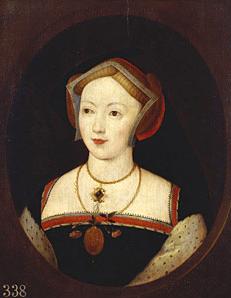
Kopia portret Nieznanej Damy, datowana na lata 1630-1670
Pamiętacie prawdopodobnie artykuł o portrecie Marii Boleyn który opublikowałam jakiś czas temu. Artykuł wywołał wiele emocji i mam nadzieję, że jego kontynujacha również okaże się ciekawa.
Alison Weir na swojej stronie internetowej oraz w nowej książce ‘Mary Boleyn – the Great and Infamous Whore’ napisała, że istnieje 6 wersji portretu ‘Marii Boleyn’ co wskazuje, że osoba przedstawiona na tym portrecie musiała być kimś ważnym na dworze Henryka VIII ; oraz fakt że kobieta przyodziana jest w futro z gronostaja, zarezerwowane dla klasy wyższej i rodziny królewskiej : świadczy iż pochodziła z rodziny królewskiej.
Przeprowadziłam własne badania na ten temat i odkryłam kilka ciekawych faktów. Chciałam przede wszystkim dowiedzieć się czy rzeczywiście istnieje 6 wersji tego portretu oraz skąd te wersje pochodzą oryginalnie. Skontaktowałam się z Anną L. Splender z zamku w Hever która napisała ;
Copy of 'Mary Boleyn' portrait c. 1630-1670
You probably remember my article about portrait allegedly depicting Mary Boleyn. Historian and author Alison Weir claims that there are 6 versions of this portrait and that it probably depicts a royal sitter because of the ermine fur;
“The fact that there are at least six versions of the ‘Mary’ portrait indicates that there was demand for a portrait of the sitter, and she is wearing ermine, a fur restricted to the upper nobility and royalty.”[1]
I did a research about this and in this article I am going to write more about this portrait. I was looking for information about provenance of the portrait of ‘Mary Boleyn’ and confirmation of Alison Weir’s claim that there were ‘at least 6 versions of this portrait’.
I contacted Anna L. Splender who is a Deputy Head Steward at the Hever Castle. She kindly replied that;
 Polish
 English


